
 + 1 972 387 0080

ON-LINE TRADING LESSONS
Lesson 8 — The Trading Pit
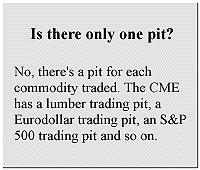
Oh, yes. That’s where it all happens. Futures contracts are traded in trading pits at the Chicago Mercantile Exchange (CME) and other exchanges. That’s where traders determine futures prices, which change from minute to minute as trading goes on.
What is trading?
In the futures industry, trading means buying and selling futures contracts. If you buy a futures contract at one price and sell it at a higher price, you make money. If you sell it at a lower price than what you paid for it, you lose money. Some people who trade futures are in it to make a profit by trading. Others are producers or users of commodities who are trading futures to protect a sale or purchase price.
The highest bid or lowest offer (the most competitive price) sets the true market value. A trader must “best” or beat that price in order to set a new “best” bid or offer. The seemingly frantic nature of the open outcry system is really about brokers and traders constantly bidding or offering prices that the market will perceive as the true value; and trades will then occur.
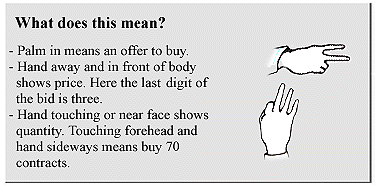
Hand signals, as well as vocal open outcry, relay quantity and price information between traders and brokers across the pit. As in any auction situation, a trader’s action or word is a bond. With billions of dollars at stake, each action in the pits is actually a carefully recorded and executed trade agreement. Though seemingly chaotic, what you are witnessing in a futures trading pit are market professionals conducting business at lightning speed for either customers or for personal profit. In markets where prices move rapidly within short periods of time, the speed of trade execution and timely delivery of orders to customers is essential.
On-Line Trading Lessons — Courtesy of the Chicago Mercantile Exchange
Futures trading is highly speculative, and can involve the loss of some or all of any monies you may commit to such trading.
No responsibility is assumed for the use of material available at this web site, and no express or implied warranties are made. Futures trading is highly speculative, and can involve the loss of some or all of any monies you may commit to such trading.
This material has been prepared by a sales or trading employee or agent of Dallas Commodity Company and is, or is in the nature of, a solicitation. This material is not a research report prepared by Dallas Commodity Company's Research Department. By accepting this communication, you agree that you are an experienced user of the futures markets, capable of making independent trading decisions, and agree that you are not, and will not, rely solely on this communication in making trading decisions.
The risk of loss in trading commodity futures contracts can be substantial. You should therefore carefully consider whether such trading is suitable for you in light of your financial condition. You may sustain a total loss of the initial margin funds and any additional funds that you deposit with your broker to establish or maintain a position in the commodity futures market.